
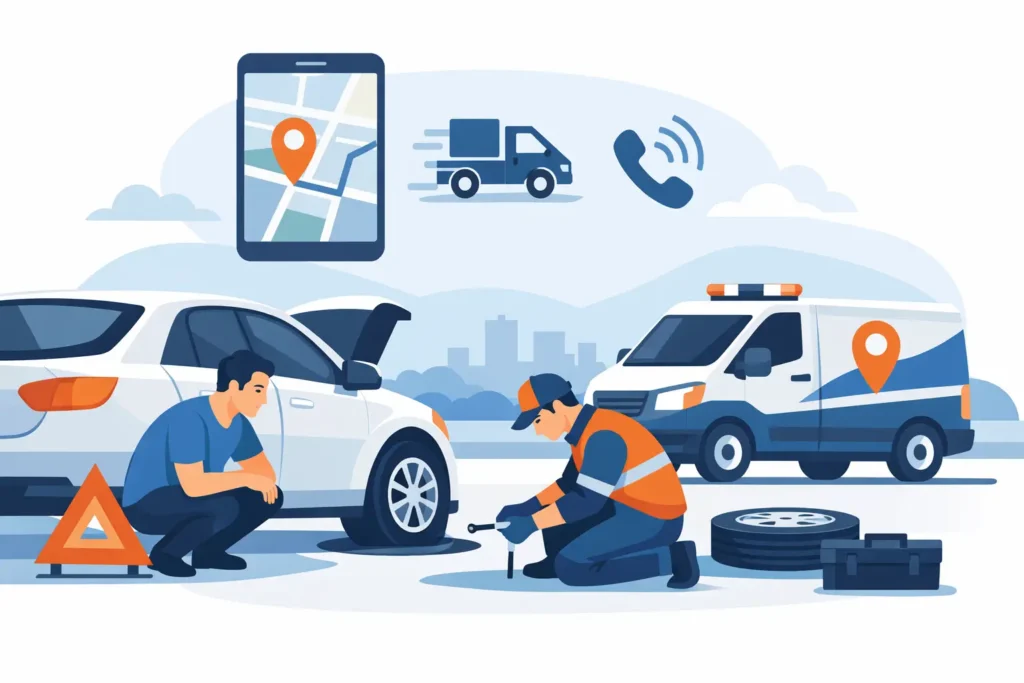
A flat tire can turn a normal drive through Spring, The Woodlands, Conroe, or Shenandoah into an immediate roadside problem. Whether you are headed to work, picking up kids, or traveling along I-45, flat tire assistance gives you a safe way to get moving again without struggling beside traffic or risking further vehicle damage.
The right next step depends on where you are, whether you have a usable spare, and what caused the tire to fail. A small nail in the tread is different from a tire blowout, sidewall damage, or a wheel that has been bent by a pothole. When you are unsure, do not guess. Get your vehicle to a safe location and call a local roadside professional.
What to Do When You Get a Flat Tire
As soon as you notice a tire losing air, reduce speed gradually. Avoid sudden braking or sharp steering, especially if the vehicle is pulling to one side. Turn on your hazard lights and move as far from moving traffic as conditions safely allow. A parking lot, wide shoulder, or side street is far better than stopping in an active lane.
Do not continue driving on a flat tire just to reach the next exit. Even a short distance can destroy the tire, damage the wheel, and create a more expensive repair. A tire that may have been repairable can quickly become unusable once it has been driven while flat.
Once you are stopped, check your surroundings before opening the door. Traffic moves fast on busy roads around South Montgomery County, and visibility can drop quickly during heavy rain, early mornings, or after dark. If your location does not feel safe, stay in the vehicle with the doors locked and call for help.
Flat Tire Assistance Starts With Safety
Changing a tire is not always a simple roadside job. Many drivers have a spare tire and jack but do not have a safe place to use them. Soft ground, a sloped shoulder, narrow lanes, poor lighting, and passing trucks can turn a routine tire change into a real hazard.
Professional flat tire assistance means a trained operator can assess the situation, use the proper equipment, and install your spare safely when possible. If the tire cannot be changed on the roadside, the vehicle can be transported to a tire shop or repair facility. That matters when there is no spare, the spare is flat, the wheel is damaged, or more than one tire has failed.
A good roadside response is about more than removing lug nuts. It is about keeping you out of traffic, avoiding damage to the vehicle, and making sure the replacement tire is mounted securely before you drive away.
When a Spare Tire Can Get You Home
A spare tire is often the fastest solution, but it is not a permanent repair. Temporary compact spares, sometimes called donut spares, are designed for limited distance and lower speeds. Check the instructions on the spare or in your owner’s manual, then drive directly to a tire shop when the change is complete.
Before relying on a spare, it needs to be in usable condition. Many drivers discover too late that the spare is low on air, damaged, missing, or secured with a lock key they cannot find. If the spare is not safe to use, towing is usually the better option.
Full-size spares offer more flexibility, but they still need the correct tire pressure and proper installation. A roadside professional can help confirm that the spare is appropriate for the vehicle before you continue your trip.
When You Need a Tow Instead of a Tire Change
There are times when a tire change is not enough. If the wheel is cracked, the tire has come apart, or the vehicle has suspension damage after striking debris or a curb, driving on a spare may not be safe. The same applies when the vehicle has multiple flat tires or no working spare.
A rollback flatbed is often the safest choice for vehicles with low ground clearance, all-wheel drive, luxury wheels, or damage that makes driving risky. Flatbed transport keeps all four wheels off the road and avoids placing extra strain on the vehicle.
This is also a practical option if you are stranded in an unsafe location. Rather than spending time trying to diagnose the problem on a crowded roadside, you can have the vehicle moved to a trusted repair shop. The goal is not simply to get the car rolling. It is to get you and your vehicle out of a bad situation safely.
Common Causes of Flat Tires in South Montgomery County
Road debris is a frequent problem, especially near construction zones, major highways, and busy commercial areas. Nails, screws, metal fragments, and sharp objects can puncture a tire slowly or cause a rapid loss of air. Potholes and rough road edges can also damage tires, wheels, and valve stems.
Texas heat creates another issue. High temperatures raise tire pressure and accelerate wear, particularly on tires that are already old, underinflated, or worn unevenly. A weak tire may fail without much warning during a long commute or weekend drive.
Some flats develop slowly. You may notice that one tire needs air every few days, the vehicle drifts, or the tire pressure warning light keeps returning. Those signs should be checked before the tire goes completely flat. Waiting can leave you stranded at the worst possible time.
What to Have Ready When You Call for Help
A quick call goes faster when you can share your exact location, vehicle make and model, and the type of problem you see. If you are on a highway, mention the direction of travel, nearest exit, mile marker, or recognizable landmark. If you are in a neighborhood or parking lot, provide the street address and describe where the vehicle is parked.
It also helps to say whether you have a spare tire. Let the operator know if the vehicle is in a garage, has a wheel lock, sits low to the ground, or has more than one flat tire. Clear details help the right equipment arrive the first time.
While waiting, keep these basic precautions in mind:
- Keep hazard lights on and remain away from traffic.
- Do not stand between your vehicle and moving lanes.
- Avoid placing hands near a damaged tire or wheel after a blowout.
- Keep children and pets inside the vehicle when the roadside is unsafe.
Local Help Makes a Difference
When you need roadside help, a distant dispatch center can add confusion at the exact moment you need clear answers. A local towing provider understands the roads, traffic patterns, neighborhoods, and common pickup points around Spring, The Woodlands, Oak Ridge North, Shenandoah, and Conroe.
Local Tow Truck focuses on direct, practical help for drivers who need a tire changed, a vehicle transported, or a clear answer about the safest next step. You should not have to sort through vague options while stranded. Call a pro, provide your location, and get the right roadside response for your situation.
A flat tire is stressful enough. Get to a safe spot, make the call, and let a nearby professional handle the roadside work so you can get back to your day with confidence.


