
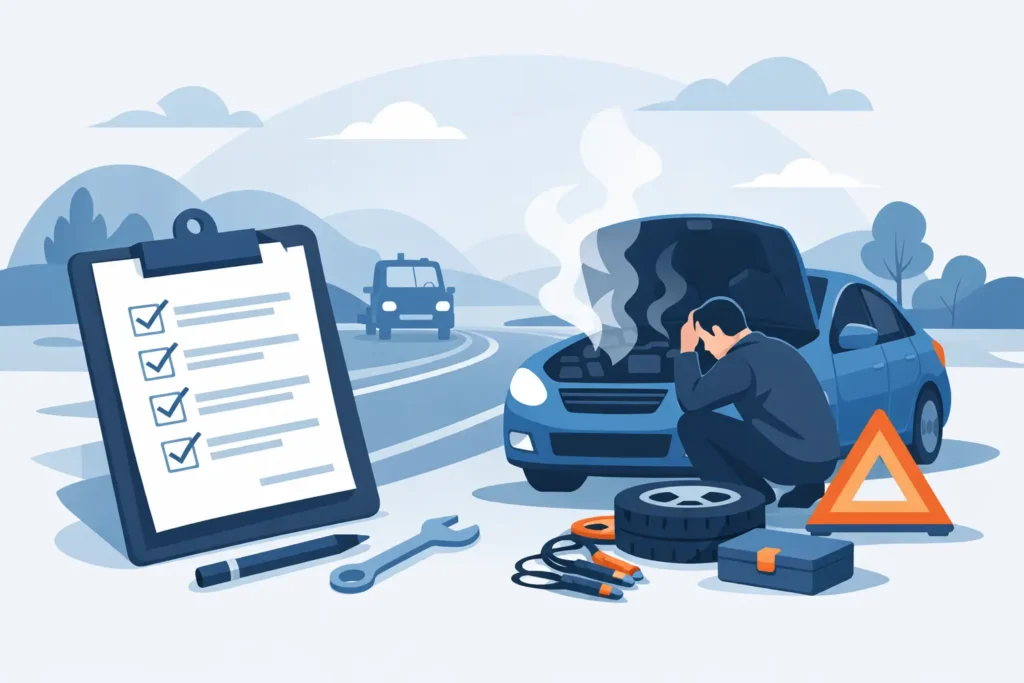
A stalled car on I-45 or a dead battery in a Spring parking lot can turn a normal day into a problem fast. This car breakdown checklist guide keeps the next step clear when stress hits, so you can stay safe, protect your vehicle, and get help moving without wasting time.
Car breakdown checklist guide: what to do first
The first priority is your safety, not the car. If the vehicle is still moving, ease off the road as far as you safely can. A wide shoulder, parking lot, or side street is better than stopping in an active lane. Once you stop, shift into park, set the parking brake, and turn on your hazard lights right away.
Take a quick look at your surroundings before you do anything else. If you are close to fast traffic, on a narrow shoulder, around a blind curve, or in low visibility, stay inside the vehicle with your seat belt on unless there is an immediate danger such as smoke or fire. Many drivers make the mistake of getting out too soon. On a busy road, that can be more dangerous than the breakdown itself.
If you can exit safely and traffic conditions allow it, place reflective triangles or road flares if you keep them in your vehicle. At night, during heavy rain, or in early morning fog, visibility matters even more. Drivers in The Woodlands, Shenandoah, and Conroe know weather and traffic can change quickly, so assume other motorists may not see you soon enough.
Check the problem without taking risks
Once you are safe, figure out what kind of breakdown you are dealing with. You do not need a full diagnosis. You just need enough information to decide whether this is a simple roadside issue or a tow situation.
If the engine will not crank and the lights are weak or dead, you may be dealing with a battery problem. If one tire is flat but the vehicle is otherwise fine, a spare tire change may get you moving. If the engine overheated, you smell burning, see leaking fluid, or hear harsh mechanical noise, do not keep trying to drive it. Those are the moments when a short drive can turn a repair into a much bigger bill.
This is where judgment matters. A flat tire in a safe parking lot is different from a flat tire on a narrow shoulder near speeding traffic. A dead battery at home is different from a dead battery in a crowded intersection. The problem itself matters, but the location matters just as much.
What to have ready before you call for help
When you call for roadside assistance or a tow, being prepared saves time. The dispatcher or driver needs the right details to reach you fast and bring the right equipment.
Know your exact location as closely as possible. That may be a highway marker, cross street, store name, parking lot section, or nearby landmark. In South Montgomery County, a clear location can cut down delays, especially if you are near feeder roads, frontage roads, or highway exits that can be easy to mix up.
Be ready to share your vehicle make, model, color, and whether it is two-wheel drive, all-wheel drive, or a larger truck or SUV. Also explain the issue in plain language. Say whether the car will not start, has a flat tire, is overheating, is locked with keys inside, or was involved in a minor collision and needs transport. That helps the towing professional show up ready instead of guessing.
If you have passengers, mention that too. It can affect where the driver parks and how the stop is handled, especially with kids, older adults, or pets in the vehicle.
A practical breakdown checklist for your car
A good car breakdown checklist guide is not only about what to do during the emergency. It is also about what you should already have in the vehicle. You do not need to overpack your trunk, but a few basics can make a bad situation easier.
Keep your registration and proof of insurance current and easy to find. Make sure your phone stays charged, and carry a car charger if you can. A flashlight, reflective triangles, jumper cables, a basic first aid kit, bottled water, and a tire pressure gauge are all smart to keep on hand.
If you drive long distances around Spring, The Woodlands, Oak Ridge North, or Conroe, add weather-appropriate items. Texas heat can make a roadside wait harder than people expect, so water matters. If storms are common, a rain jacket or small towel can help more than you think.
A spare tire and jack are useful, but only if they are actually in the car and in working condition. Many drivers assume they have both, then find out the spare is underinflated or missing. It is worth checking before you ever need it.
When to stay with the car and when to step away
Most of the time, staying with the vehicle is the safest move. It makes you easier to locate, and it avoids the risk of walking near traffic or getting stranded farther away. If you are in a parking lot or residential area, you may feel comfortable standing outside the vehicle while you wait, but stay aware of your surroundings.
There are exceptions. If you smell fuel, see smoke, or think the vehicle could catch fire, move away to a safe distance and call for help immediately. If your car is in an unsafe position, such as partially blocking traffic, tell the towing company that right away so they understand the urgency.
If a stranger stops to help, use caution. Some people mean well, but you do not need to accept a ride or hand over your keys. If help is already on the way, it is fine to say so through a cracked window and stay inside.
Common breakdown mistakes that cost drivers time and money
One of the biggest mistakes is continuing to drive a vehicle that is clearly warning you to stop. If the temperature gauge spikes, oil pressure drops, or the car starts making loud mechanical noise, pulling over quickly can prevent severe engine damage.
Another mistake is calling for help without enough information. If you cannot describe where you are, what vehicle you have, or what happened, the response can slow down. Even a quick photo of a nearby sign or business can help you communicate your location.
Drivers also lose time by trying fixes that are not realistic for the situation. Not every flat tire should be changed on the roadside. Not every dead battery should be jumped in a tight parking garage or heavy traffic area. Sometimes the safer and cheaper choice is to call a pro first.
If you break down in South Montgomery County
Local roads and highways bring their own challenges. On I-45, traffic speed is often the main hazard. In shopping areas around The Woodlands and Shenandoah, access points and parking lot layouts can make it harder to describe where you are. In residential parts of Spring or Oak Ridge North, the issue may be less about traffic and more about getting a fast ETA from someone nearby.
That is why local response matters. A trusted local towing service usually understands the area, the common traffic patterns, and how to reach drivers without sending them through a long phone chain. If you need a tow, jump start, tire change, lockout service, or flatbed transport, clear communication and a fast dispatch matter more than a long explanation.
Local Tow Truck serves drivers across South Montgomery County with that kind of direct, action-first help. When you are stranded, speaking with a local pro is often the fastest route back to control.
What to do after the immediate problem is handled
Once your car is started, repaired enough to move, or loaded for transport, take a minute to think past the emergency. If the issue was a dead battery, ask yourself how old it is and whether replacement is the smarter next step. If it was a flat tire, inspect the others soon. If the vehicle overheated or leaked fluid, do not treat the tow as the finish line. The real fix still needs attention.
It also helps to reset your emergency prep. Replace used supplies, recharge your phone battery pack if you keep one, and make sure your spare tire and tools are ready again. A breakdown is frustrating, but it is also a reminder of what your vehicle kit was missing.
The best checklist is the one you can remember under pressure. Get to safety, make your vehicle visible, assess the problem without taking risks, and call for the right help with clear information. When the road puts you in a bad spot, calm and quick action goes a long way.


